
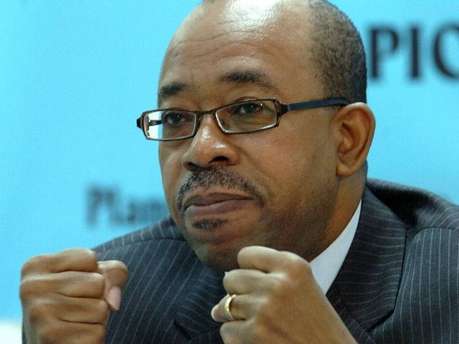
Chief Executive Officer of the Petrocaribe Fund, Dr. Wesley Hughes, says any change in the agreement with Venezuela would have an impact on Jamaica’s balance of payments.
His comment follows concerns raised by the IMF’s Western Hemisphere Director, Alejandro Werner, and New York University Professor of Economics, Nouriel Roubini.
Speaking at a high level Caribbean Growth forum in Montego Bay last week, Mr. Werner and Professor Roubini said political and economic conditions in Venezuela could have dire implications for countries that benefit from Petrocaribe.
Dr. Hughes says the government has considered the potential impact.
Energy Minister Phillip Paulwell said earlier this year, that Venezuela has committed to continuing the existing arrangement with Jamaica, at least until the island’s Extended Fund Facility with the IMF ends in 2016.
But on the global market, oil prices are trending down.
This means Venezuela is earning less from its number-one export, exacerbating an already fragile economy.
Professor Roubini is predicting that falling oil prices could spell the end of Petrocaribe.
But Dr. Hughes is optimistic.
According to Dr. Hughes, Jamaica accesses 4-to5-hundred million US dollars worth of oil from Venezuela per year.
They’ve been paying back about 1-hundred-million US dollars per year, resulting in a total debt to Venezuela of about 2-point-5 billion US dollars as of January this year.
Jamaica has 25 years to repay its PetroCaribe debt.
Dr. Hughes says it Jamaica’s balance of payments would be impacted, if the agreement ends after 2016.
–30–
