
Jamaica’s Constitutional Court has determined that the high levels of crime that plagued the country over the five-year period between 2018 and 2023 did not constitute an emergency.
The declaration is contained in a landmark ruling issued on Friday.
Justices Bertram Morrison, Andrea Pettigrew Collins and Simone Wolfe Reece found that the general high levels of crime cited as justification by the security forces and relied upon by the Holness administration did not meet the constitutional standard.
It’s the latest in a string of court defeats for the Holness-led government.
Ricardo Brooks has been reading the 44-page judgement.
In 2017, more than 1,600 Jamaicans were murdered.
St. James alone accounted for 335 of those murders.
It was one of the highest murder tallies in any parish in decades.
The situation caused widespread alarm and resulted in calls for action.
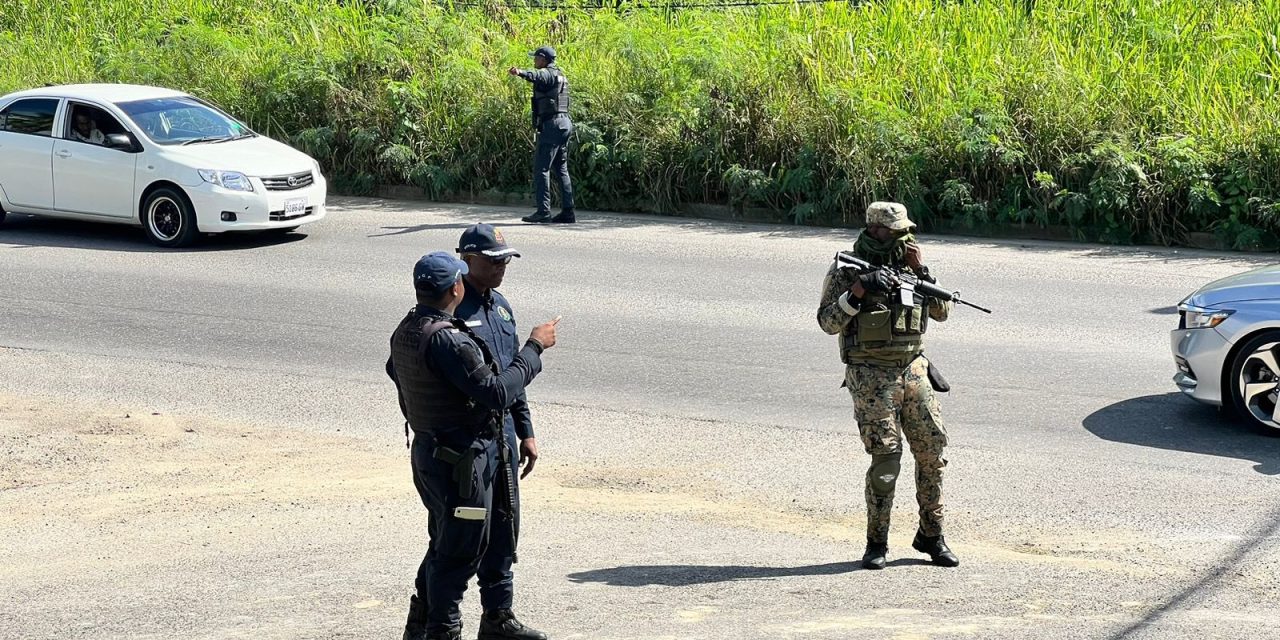
On January 18, 2018, Prime Minister Andrew Holness advised the country that the Governor General had declared a State of Public Emergency across the parish.
At the time, Holness indicated that the security forces had advised him that crime in the parish was of such a nature and so extensive in scale that it warranted the declaration.
On Friday, the judges of the Constitutional Court threw cold water on that security advice.
In their judgement, no emergency existed within the meaning of the Jamaican constitution.
In dismissing evidence provided to the court by Deputy Commissioner of Police Clifford Blake, the judges reasoned that the senior crime fighter had not identified the person or bodies of persons who had taken action to warrant the imposition of a state of emergency.
The judges say DCP Blake only described in general terms the high crime rate in various areas.
Despite the government’s argument that the Governor General declared the States of Emergency to secure the essentials of life in the affected communities, the three learned judges declared that there was no evidence of that.
According to the judges, the fact that there was a sharp decline in murders and shootings during the period of a State of Emergency is not within the spirit of the requirement of the constitution.
The judges reasoned that an argument of the ends justified the means was not persuasive.
In a particularly surprising part of the judgement, it also appears the judges believe the normalisation of a high crime rate in Jamaica means it can no longer be considered an emergency.
According to their reasoning, there is logic and good sense in the assertion that a state of affairs which persists over a period of years cannot properly be described as an emergency.
They determined that under the constitution, an emergency is something sudden or unexpected that negatively impacts an entire community.
They say in order for the declaration to be valid, the Governor General must be satisfied that the action is sudden and on so extensive a scale that it is likely to endanger public safety.
The judges say the action may have already been taken or is immediately threatened.
They say a State of Emergency, as intended by the Constitution, would be justified if a war was imminent, there was an earthquake or hurricane or if the country’s democratic institutions were threatened by subversion.
Criminologists have repeatedly pointed out that the country’s murder rate is in fact equivalent to countries that are at war.
The judges argued that the persisting problem of murders in areas such as St. James is evidence that the declaration of the States of Emergency has not achieved the goal of containing serious criminal activities in the areas it was imposed.
This, they say, proves the declarations were not demonstrably justified or proportionate.
Finally, the judges found that the declaration of new states of emergency days after the expiration of another was an attempt by the Holness administration to circumvent the constitutional provisions and process.
The declarations were declared void and inconsistent with the constitution.
